Skip navigation

Tag Archives: Books

Douglas Adams would have been 61 years old today. He passed away on May 11th, 2001, two days before I turned fourteen, and he has been incredible influence on me. I first encountered Douglas Adams when I was browsing my uncle’s science fiction and fantasy book collection, and a seemingly innocuous little book called The Hitchhiker’s Guide to the Galaxy caught my eye. If I had only known then what I was getting myself into. 

I was instantly enthralled by Adams’ writing style, the seamless blending of standard sci-fi with a healthy does of dry British wit. It was the best kind of escape, and all I needed was to know where my towel was at any given time. I don’t remember how long it took me to read Arthur Dent and Ford Prefect’s first adventure. There was a lot of laughter. There may even have been tears (brought on by too much laughter). Now, many years and several sequels later, I’m still just as much a  fan of a brilliant series. Happy birthday, Mr. Adams. You are greatly missed. 

Tomorrow is Dr. Seuss’ birthday, and so we’ve reached another Read Across America Day. Colorado Governor John Hickenlooper has released the following to celebrate.

Read Across America Day


Now get out there and read! Help promote literacy. The future of the world depends on it.

February is Library Lovers Month, so I’m going to share a little love for libraries that I found today. Courtesy of the folks over at Daily Infographic, here’s one titled Libraries Are Forever.

libraries-are-forever-972-640x4094

The Swords of The Ancients is two years old today! Two years ago, I started this blog to help facilitate the crafting of my first novel. Since then, I’ve written upwards of 30,000 words toward that goal and developed my main characters considerably. I’m nowhere near where I would like to be in terms of progress on this particular project, but I’ve found that through various connections I’ve made since beginning this blog, I’ve found a great deal of inspiration. I thank you all, my wonderful readers. While I’d probably still continue this just for my own sake, it’s nice to know that you’re here.

It’s time for some intense reading. We started the Winter Reading Program at my library a few days ago, and so the challenge is to make it through eight books over the course of eight weeks. I’ve already knocked out a book on the making of The Hobbit: An Unexpected Journey. I’m reading a bunch of the collected editions of DC’s New 52, but I’m trying to avoid counting those toward my eight, just for the sake of getting caught up on my backlog of books. I am almost two hundred pages through The Casual Vacancy right now, and I’m really enjoying it. A full review will follow as soon as I finish. I’m going to try to get through some classic fantasy pieces now as well, such as The King of Elfland’s Daughter and The Worm Ouroboros, both of which have been recommended by V. I’ve also added The Well at the World’s End to my to-read list, since it served as an inspiration to Tolkien. There’s a few books I’ve been suggesting to patrons at work at the library recently, and so I’m considering tossing some rereading in as well, with Dune at the top of that list. So many books… Goodreads has been very beneficial in keeping track of them. If you’re a reader and you don’t have a goodreads account, I would highly recommend setting one up. It’s free, and it’s a great way to track what you’re reading, what you have read, and what you want to read, plus being able to rate and review books you’ve read.

I’m going to let you go for now, dear readers. I owe you some new stories, after all. I’ve been issued a challenge by Chuck Wendig. 1000 word flash fiction based on photos of some absolutely incredible and surreal real world locations. Feel free to take part. Entries are due by the 25th.

Excelsior!
(Note to self: Create a catchphrase that’s better than Stan “The Man” Lee’s)

I’ve accomplished a goal that I’ve had for six years. I finally acquired print copies of the Dungeons and Dragons 3.5 core rule books.

Yes, it’s kind of a big deal. There’s something awesome about having the actual books and not having to rely on PDF versions, especially when outlets for laptops are limited in our gaming spaces. Granted, I don’t have as much use for them right now as I would have a few years ago (mostly due to playing a lot of Pathfinder of late). However, I plan (and oddly enough, even hope) to be a parent someday. So when the girlfriend and I finally do have a kid, they’ll eventually be old enough to pick dad’s Player’s Handbook off the shelf. On that day, family game night gets a lot more interesting.

“Honey, get the dice and the video camera. We’ve been waiting for this moment.”

“Remember, offspring, beauty is in the eye of the beholder. So is antimagic, disintegrate, scorching ray…”

“Two rules. Keep the cleric alive, and never split the party.”

Do you read magazines targeted at writers? I read a couple of different ones in my job at the library. I’m not about to claim that it makes me a better writer, but it does help me find some inspiration from time to time. I don’t only read magazines, though. I read blog posts by fellow writers. I follow them on twitter, published or otherwise. I do try to avoid books on writing, but that’s another matter altogether.

There’s an incredible community that is present in the writing world. We’re competition, yes, but we’re also the support network (yes, we have a support group for writers, we meet wherever there is booze). Without this community, I would have given up on my dream of being a writer a long time ago.

There are three things that I’ve learned that a writer must do in order to be successful.

1.) You have to write. I know it might seem self-explanatory, but we have a tendency to get caught up in the distractions of every day. Social media, research, the siren song of google and the endless labyrinth that is tvtropes. All of these things can keep us from doing what we need to do, whether it’s putting pen to paper or fingers to keyboard (and both of those analogies began to sound dirty inside my head the minute I typed them, damn it). I know that I personally am over a week behind on NaNoWriMo right now because of various concept changes and plot shifts and other things keeping me from doing just what I set out to do.

2.) You have to read. It’s been said time and time again that reading is the only way to learn how to write. Find your favorite authors and read their works, early and late. See how they evolved over time. Study how they create characters and build plot events; how sentences are structured and how the story is shaped. Learn what works for you as a reader. Find the authors you don’t like, see what missteps they make so that you can avoid them.

3.) You have to live. Not like breathing and heart beating (though that generally is a prerequisite for numbers one and two above, and anyone finding out about a writer not being alive and still putting out new material should notify me right away). You have to experience things. Without channeling a certain amount of your own life into your characters, they’re going to come across as flat and boring. It doesn’t matter if you’re writing science fiction and have never been to another planet, or if you’re writing fantasy and have never fought a dragon with your bare hands (or in some cases, your bear hands). Everything you do can be turned into an aspect of a story. Did a conversation you had make you laugh? Recreate it in a setting-appropriate manner between your characters. Did you walk home from the bar in the dark last night? Take what you can remember of that walk and channel the emotion of it into your work in progress.

Thank you, fellow writers, for being part of the community that has taught me so much over these last few years. You’ve been great.

This week marks the 30th anniversary of Banned Books Week, a week-long celebration of the right to read.

Throughout history, books have faced challenges and bans from people around the world. These challenges come from groups and individuals who have taken it upon themselves to determine what is “appropriate” for others to be reading based on tired dogma and personal opinion. In the words of Granville Hicks, “[a] censor is a man who knows more than he thinks you ought to.”

Some of the greatest pieces of literature ever written have been banned or challenged in schools, churches, and public libraries for various reasons. The Great Gatsby, for example (one of my favorite books), was challenged in 1987 by Charleston, South Carolina’s Baptist College because of “language and sexual references in the book.” Now I don’t know about you, but I’m pretty sure that this particular phrase could have been used to challenge the presence of the Holy Bible, considering the Old Testament features several chapters which single-handedly contain more explicit sexual references than anything written by F. Scott Fitzgerald. J.D. Salinger’s classic tale of teen rebellion, Catcher in the Rye, was banned for being “a filthy, filthy book.” That’s a bit of a vague excuse if you ask me, and makes me wonder if the people behind that challenge had actually read the entire book, as, in an amusing twist, the narrator believes a “catcher in the rye” to be one who safeguards the innocence of children. As recently as 2009 To Kill a Mockingbird has been challenged for use of the word “nigger” among other language that was dubbed as inappropriate. The list goes on and on, and increases in absurdity. The works of Tolkien, a staunch Catholic, burned in New Mexico in 2001 as “satanic.” Faulkner’s As I Lay Dying “[b]anned at Central High School in Louisville, KY (1994) temporarily because the book uses profanity and questions the existence of God.”

More recent works are facing challenges and bans as well. Harry Potter, The Hunger Games, and Captain Underpants have all been threatened with removal from library shelves. I’ve personally encountered people willing to ban materials on nothing more than hearsay. My mother, herself a Catholic, has encountered this at the bookstore she owns and operates.
Customer sees Harry Potter on the shelf: “I can’t believe you have that book in your store! It’s about devil worship and magic and terrible things!”
Mum: “Have you actually read the books?”
Customer: “Well, no, but I heard that they were bad.”
Mum: “Well, if you actually took the time to read the book, you’d learn that they’re about a little boy who overcomes terrible adversity and still manages to become a good person despite facing an evil enemy bent on the destruction of the world, and that there’s nothing harmful about the books.”
Customer: “Oh.”
It’s enough to drive a person insane. “The greatest enemy of knowledge is not ignorance, it is the illusion of knowledge.” -attributed to Stephen Hawking

My favorite response to any of these challenges is taken from Oscar Wilde, a man who knew quite a bit about dealing with people who were upset by things that he wrote and did. “The books that the world calls immoral are the books that show the world its own shame.” Humans have an unfortunate history of trying to hide our mistakes and our failures, from the child who attempts to disguise the fact that he wet the bed to avoid the anger of a parent to the government that covers up evidence that it had authorized criminal acts against its own people. It’s human nature, I suppose, but it shouldn’t stop us from learning from our own mistakes. If we hide away all of the bad things that people have done in the past, we can’t do that. You know what they say about learning from the past, and those who are unable to do so.

We need to get over this. If I may be rather earnest, it’s bullshit. Books are here, and they’re being read. If you stop someone from getting a copy at their local library, that might slow them down for a while, but the information, the ideas, are still out in the world. We can’t stop people from experiencing life. Sex and profanity and hate and love and violence are going to be there, whether someone read about it in a book or not. We’ve screwed things up before. Let’s not do that again. 

It’s Banned Books Week. I’m celebrating by reading as many banned or challenged titles as I can. I work in a public library and a bookstore, and I’m providing the people with free ideas and ideas of freedom. “[a]nd ideas are bulletproof.” -V (This V, not that V

With the unfortunate continuation of the rise of “unscripted” reality television shows, it seems like every conceivable topic is getting at least one series dedicated to it. Some things are apparently even big enough to warrant entire cable/satellite networks dedicated to them. What’s that? You collect Beanie Babies and you’ve purchased ten of each one that came out since 1993 and your house is now in danger of collapse because you’ve knocked out supporting walls to make room for your little stuffed friends? Better go on Hoarders. Like tattoos? There’s Miami Ink and L.A. Ink. Friends with someone who loves the bizarre and macabre? Point them toward Oddities or Oddities: San Francisco.

It seems as though there’s something for everyone, right? Well, not quite. What about us? What about the writers? Where’s our series showcasing authors and libraries and bookstores and the pains of staying up all night for a week to try to meet a deadline? Apparently I’m not the first person to think this way. Back in May, Entertainment Weekly’s Stephan Lee (@EWStephanLee) proposed a concept, laying out a manner in which such a thing could be done. It’s sort of like televising your progress through Nanowrimo. I’m now debating running this as some sort of surreal web series. Watch my sanity slowly slip away as I attempt to craft a novel in thirty days! No, on second thought, don’t do that. Webcam will be hidden away. Fear not, dear readers.

In all seriousness, this is reality TV I could stand to watch, and might even actively follow. You’ve gotten everyone else, network execs. Where’s our obsession?

In my new position at the public library, I’ve been learning my way around the print reference collection. Let me say this. If a library is a magical place, the reference collection is the source of the power. In my ignorance, I had never ventured behind the reference desk during my initial year at my branch. After spending a mere half hour wandering through the shelves, I realized the error of my ways.

I have been spending my initial training days studying the print reference collection because it is an integral part of our library. Even if most of the searching and problem solving that reference librarians and information services specialists do now is done online, knowing our way around the physical reference section is critical.

Even if it’s only a matter of being able to search for information in the event that the power goes out or the internet is down, I know where I can go to find necessary info for my patrons or for myself. There’s something incredibly satisfying about being able to go to a shelf, pull a book, and open it to the page you need for the data you are trying to find.

A part of me really misses the old card catalogs of my youth. That’s right, folks, I grew up learning the Dewey Decimal system so that I could find a 3×5 card with a book’s call number on it, match the number on the card to a book on the shelf, and take that book to the librarian to check out. Now I understand and fully accept that technological advancements have made it so that a card catalog is now found in a museum rather than a library, but I am still proud that I know how to use it. (I file that accomplishment along with my knowledge of 8-track tapes, rotary phones, and manual transmissions.)

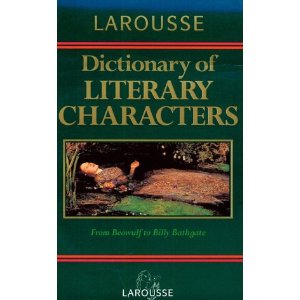
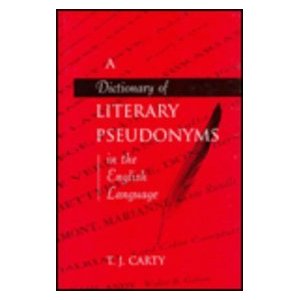
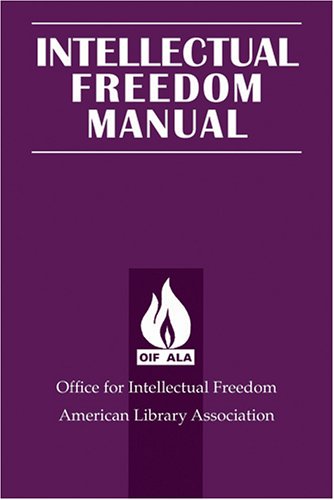
I’ve found all manner of wonderful tools to put to use, both for myself and for others. Here’s a few of them.


I am very pleased to have found copies of books like these on the shelves. I foresee a great deal of free time being spent browsing through the reference collection now, and I am happy to say that research for future projects is going to be a lot more fun than I ever would have guessed.

Since my physical dictionary is still in a cardboard box somewhere (ugh), I’ll have to resort to web sources for this one. Dictionary.com defines a librarian as “a person trained in library science and engaged in library service.” At this point in my life, the term does not directly apply to me. I’m a library clerk, merely a person engaged in library service. The training is still severely lacking, and there’s this piece of paper with a few words on it, like master, library, science, and my name that is still at least two years away. I’m not a librarian. Not yet. It’s a goal, though, and it’s one that I’ve grown more and more serious about in the last few years. One of my coworkers has described it as catching the “library bug” and wanting to get more involved.

My background is filled with books. My parents both read to me and my sisters while we were getting ready for bed. As I was growing up, I would frequently visit the local public library, a site that still plays into a great deal of my writing. We would have story time there, and my sisters and friends and I would always participate in the summer reading program. There was a small local bookstore owned by a couple (quite literally, as they were married at the time) of the teachers that we’d visit on occasion. When they decided that they didn’t want to run it anymore, my parents stepped in and bought it so that there would still be a bookstore in town. After that, the bookstore was my after-school hangout of choice, though I would still stop by the library on the way there. I couldn’t get enough books. I devoured everything that came into my reach.

That’s one of the few things about me that hasn’t changed as I’ve grown older. I love books, and I want to be around them whenever possible. That’s what drew me to work in libraries and bookstores. It’s why I interned for a literary agency, and it’s why I started this blog. I read because I want to read, and I write because I want to write. It’s been said that one should write the book they want to read. That’s very true. I’m going to bathe my life in ink and clothe it in parchment.

I’m going to become a librarian. There’s no doubt of that in my mind. Right now, I just need to be able to support myself and get signed up for the GRE. I’m not looking forward to the test itself, or to the couple of years of grad school that the advanced degree will require, but I am looking forward to finding a way to maintain libraries into the future. I want the world to be a safe place for readers and writers alike, and I want them to know that their work will always have some refuge. Besides, for a writer, what better day job could there be?