Skip navigation

Tag Archives: Books

This week marks the 30th anniversary of Banned Books Week, a week-long celebration of the right to read.

Throughout history, books have faced challenges and bans from people around the world. These challenges come from groups and individuals who have taken it upon themselves to determine what is “appropriate” for others to be reading based on tired dogma and personal opinion. In the words of Granville Hicks, “[a] censor is a man who knows more than he thinks you ought to.”

Some of the greatest pieces of literature ever written have been banned or challenged in schools, churches, and public libraries for various reasons. The Great Gatsby, for example (one of my favorite books), was challenged in 1987 by Charleston, South Carolina’s Baptist College because of “language and sexual references in the book.” Now I don’t know about you, but I’m pretty sure that this particular phrase could have been used to challenge the presence of the Holy Bible, considering the Old Testament features several chapters which single-handedly contain more explicit sexual references than anything written by F. Scott Fitzgerald. J.D. Salinger’s classic tale of teen rebellion, Catcher in the Rye, was banned for being “a filthy, filthy book.” That’s a bit of a vague excuse if you ask me, and makes me wonder if the people behind that challenge had actually read the entire book, as, in an amusing twist, the narrator believes a “catcher in the rye” to be one who safeguards the innocence of children. As recently as 2009 To Kill a Mockingbird has been challenged for use of the word “nigger” among other language that was dubbed as inappropriate. The list goes on and on, and increases in absurdity. The works of Tolkien, a staunch Catholic, burned in New Mexico in 2001 as “satanic.” Faulkner’s As I Lay Dying “[b]anned at Central High School in Louisville, KY (1994) temporarily because the book uses profanity and questions the existence of God.”

More recent works are facing challenges and bans as well. Harry Potter, The Hunger Games, and Captain Underpants have all been threatened with removal from library shelves. I’ve personally encountered people willing to ban materials on nothing more than hearsay. My mother, herself a Catholic, has encountered this at the bookstore she owns and operates.
Customer sees Harry Potter on the shelf: “I can’t believe you have that book in your store! It’s about devil worship and magic and terrible things!”
Mum: “Have you actually read the books?”
Customer: “Well, no, but I heard that they were bad.”
Mum: “Well, if you actually took the time to read the book, you’d learn that they’re about a little boy who overcomes terrible adversity and still manages to become a good person despite facing an evil enemy bent on the destruction of the world, and that there’s nothing harmful about the books.”
Customer: “Oh.”
It’s enough to drive a person insane. “The greatest enemy of knowledge is not ignorance, it is the illusion of knowledge.” -attributed to Stephen Hawking

My favorite response to any of these challenges is taken from Oscar Wilde, a man who knew quite a bit about dealing with people who were upset by things that he wrote and did. “The books that the world calls immoral are the books that show the world its own shame.” Humans have an unfortunate history of trying to hide our mistakes and our failures, from the child who attempts to disguise the fact that he wet the bed to avoid the anger of a parent to the government that covers up evidence that it had authorized criminal acts against its own people. It’s human nature, I suppose, but it shouldn’t stop us from learning from our own mistakes. If we hide away all of the bad things that people have done in the past, we can’t do that. You know what they say about learning from the past, and those who are unable to do so.

We need to get over this. If I may be rather earnest, it’s bullshit. Books are here, and they’re being read. If you stop someone from getting a copy at their local library, that might slow them down for a while, but the information, the ideas, are still out in the world. We can’t stop people from experiencing life. Sex and profanity and hate and love and violence are going to be there, whether someone read about it in a book or not. We’ve screwed things up before. Let’s not do that again. 

It’s Banned Books Week. I’m celebrating by reading as many banned or challenged titles as I can. I work in a public library and a bookstore, and I’m providing the people with free ideas and ideas of freedom. “[a]nd ideas are bulletproof.” -V (This V, not that V

With the unfortunate continuation of the rise of “unscripted” reality television shows, it seems like every conceivable topic is getting at least one series dedicated to it. Some things are apparently even big enough to warrant entire cable/satellite networks dedicated to them. What’s that? You collect Beanie Babies and you’ve purchased ten of each one that came out since 1993 and your house is now in danger of collapse because you’ve knocked out supporting walls to make room for your little stuffed friends? Better go on Hoarders. Like tattoos? There’s Miami Ink and L.A. Ink. Friends with someone who loves the bizarre and macabre? Point them toward Oddities or Oddities: San Francisco.

It seems as though there’s something for everyone, right? Well, not quite. What about us? What about the writers? Where’s our series showcasing authors and libraries and bookstores and the pains of staying up all night for a week to try to meet a deadline? Apparently I’m not the first person to think this way. Back in May, Entertainment Weekly’s Stephan Lee (@EWStephanLee) proposed a concept, laying out a manner in which such a thing could be done. It’s sort of like televising your progress through Nanowrimo. I’m now debating running this as some sort of surreal web series. Watch my sanity slowly slip away as I attempt to craft a novel in thirty days! No, on second thought, don’t do that. Webcam will be hidden away. Fear not, dear readers.

In all seriousness, this is reality TV I could stand to watch, and might even actively follow. You’ve gotten everyone else, network execs. Where’s our obsession?

In my new position at the public library, I’ve been learning my way around the print reference collection. Let me say this. If a library is a magical place, the reference collection is the source of the power. In my ignorance, I had never ventured behind the reference desk during my initial year at my branch. After spending a mere half hour wandering through the shelves, I realized the error of my ways.

I have been spending my initial training days studying the print reference collection because it is an integral part of our library. Even if most of the searching and problem solving that reference librarians and information services specialists do now is done online, knowing our way around the physical reference section is critical.

Even if it’s only a matter of being able to search for information in the event that the power goes out or the internet is down, I know where I can go to find necessary info for my patrons or for myself. There’s something incredibly satisfying about being able to go to a shelf, pull a book, and open it to the page you need for the data you are trying to find.

A part of me really misses the old card catalogs of my youth. That’s right, folks, I grew up learning the Dewey Decimal system so that I could find a 3×5 card with a book’s call number on it, match the number on the card to a book on the shelf, and take that book to the librarian to check out. Now I understand and fully accept that technological advancements have made it so that a card catalog is now found in a museum rather than a library, but I am still proud that I know how to use it. (I file that accomplishment along with my knowledge of 8-track tapes, rotary phones, and manual transmissions.)

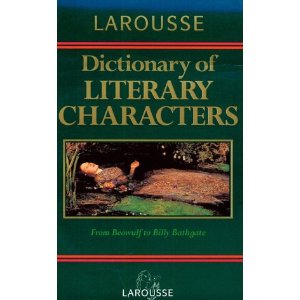
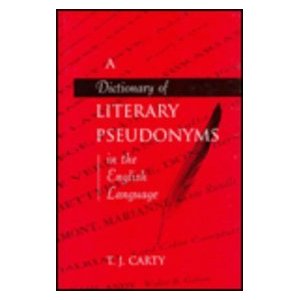
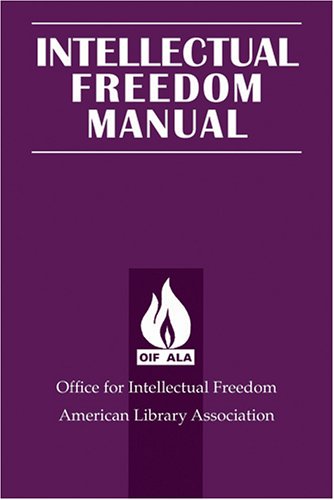
I’ve found all manner of wonderful tools to put to use, both for myself and for others. Here’s a few of them.


I am very pleased to have found copies of books like these on the shelves. I foresee a great deal of free time being spent browsing through the reference collection now, and I am happy to say that research for future projects is going to be a lot more fun than I ever would have guessed.

Since my physical dictionary is still in a cardboard box somewhere (ugh), I’ll have to resort to web sources for this one. Dictionary.com defines a librarian as “a person trained in library science and engaged in library service.” At this point in my life, the term does not directly apply to me. I’m a library clerk, merely a person engaged in library service. The training is still severely lacking, and there’s this piece of paper with a few words on it, like master, library, science, and my name that is still at least two years away. I’m not a librarian. Not yet. It’s a goal, though, and it’s one that I’ve grown more and more serious about in the last few years. One of my coworkers has described it as catching the “library bug” and wanting to get more involved.

My background is filled with books. My parents both read to me and my sisters while we were getting ready for bed. As I was growing up, I would frequently visit the local public library, a site that still plays into a great deal of my writing. We would have story time there, and my sisters and friends and I would always participate in the summer reading program. There was a small local bookstore owned by a couple (quite literally, as they were married at the time) of the teachers that we’d visit on occasion. When they decided that they didn’t want to run it anymore, my parents stepped in and bought it so that there would still be a bookstore in town. After that, the bookstore was my after-school hangout of choice, though I would still stop by the library on the way there. I couldn’t get enough books. I devoured everything that came into my reach.

That’s one of the few things about me that hasn’t changed as I’ve grown older. I love books, and I want to be around them whenever possible. That’s what drew me to work in libraries and bookstores. It’s why I interned for a literary agency, and it’s why I started this blog. I read because I want to read, and I write because I want to write. It’s been said that one should write the book they want to read. That’s very true. I’m going to bathe my life in ink and clothe it in parchment.

I’m going to become a librarian. There’s no doubt of that in my mind. Right now, I just need to be able to support myself and get signed up for the GRE. I’m not looking forward to the test itself, or to the couple of years of grad school that the advanced degree will require, but I am looking forward to finding a way to maintain libraries into the future. I want the world to be a safe place for readers and writers alike, and I want them to know that their work will always have some refuge. Besides, for a writer, what better day job could there be?

For those of you who don’t know, I work in a public library. Those of you who do know me should be aware that I have taken a strong stance against censorship in all forms, especially in the last few years, but it started long ago, back when I first discovered Banned Books Week. Even as a young child, I was a voracious reader, having completed my own trips through The Chronicles of Narnia and The Hobbit & The Lord of the Rings by the time I started second grade. I wanted to read everything that I could get my hands on, and I couldn’t understand why it was that some people would try to keep other people from reading anything.

The process of banning books is a lengthy one. Books are challenged all the time, by parents and religious groups and teachers. Librarians don’t sift through the books they’re acquiring to determine whether or not they should go on the shelves. Librarians (and libraries) promote the ability of the patron to access any information the patron may seek, regardless of personal opinion. Personal opinion should never EVER come into play when determining what works should be available to the public. “When filling their shelves, librarians do not judge the content of books on whether it would be suitable for all audiences. As public institutions, libraries may not discriminate on disseminating information on the basis of age, sex or race, which means that people can check out whatever materials they choose. That said, libraries request that parents and guardians of minors monitor their selections.” -Cristen Conger, How Stuff Works

People come up with all manner of excuses for why they want to ban certain books. This one has violence in it. That one has sex in it. There’s offensive language here. There’s racial insensitivity there. In many cases from my personal experience, however, the people who are attempting to ban a book have not read it for themselves. They have merely taken negative hype surrounding a book and made their opinion solely based on the opinions of others. Yay, sheeple!

Earlier this week, I was at work when a library patron came in, returning a book on playaway that he claimed was “pornography” and demanding that we start the ball rolling to get the book banned from our library. The title in question? Crooked Little Vein by Warren Ellis. Ever read anything by Warren Ellis? This is the guy who created Transmetropolitan, the story of journalist Spider Jersualem, whose character is heavily inspired by the real life of Hunter S. Thompson and who uses a bowel disruptor gun as his weapon of choice. Crooked Little Vein is unabashedly intense. Reading the blurb on the case could have told him that. Thirty seconds on the internet could have told this patron that.

From wikipedia: “Michael McGill, a burned-out private eye is hired by a corrupt White House Chief of Staff to find a second “secret” United States Constitution, which had been lost in a whorehouse by Richard Nixon. What follows is a scavenger hunt across America, exposing its seedier side along the way. McGill is joined by surreal college student side-kick, Trix, who is writing a thesis on sexual fetishes. McGill has to deal with strange events sometimes unrelated to his adventures – he describes himself as a ‘shit-magnet’, with weird phenomena following him wherever he goes…About.com reviewer Jonathan Lasser called Crooked Little Vein “an ace put-up job” and that it was “evidence that freedom is more valuable than repression”. Whitney Pastorek, reviewing for Entertainment Weekly takes pains to note that the work “is not for the faint of heart”, and that Ellis has “got a bright future outside of the picture books”. 

I don’t even know that this patron finished the book. My honest guess? He got too upset because something in the book disagreed with his narrow world view and shut it off. Ignorance is not bliss, people. Ignorance is ignorance, plain and simple. We have to move to the point of object permanence. Hell, two-year-olds understand that covering her eyes doesn’t make mommy disappear. We’ve got way too many heads and not enough sand for this crap to work. Acknowledge that there might be something out there that you don’t agree with, and that it’s not going to go away.

I’m tired of people blaming writers for things that they don’t like. I’m tired of people taking offense at libraries for providing freedom of access to material. Book banning and challenging is a form of oppression of the people. We need to open our eyes, and face the future with courage. Stop book banning. Stop ignorance. Embrace knowledge. Visit your local library and tell them how much you appreciate what they do for you. I’m going to go read Warren Ellis.

This is one of the best articles on books that I’ve read in a long time, and I’ve gone back to it several times over the last month because I’ve been trying to decide when it was appropriate to share it with you, dear readers. The writer of the article, Tom Nissley, writes that e-Books may indeed have their place in the future, and that he hopes that the influence of paper books not be forgotten. “I don’t mean to make a fetish out of printed books, and I’m not asking to burn (or delete) ebooks, or their devices. Maybe all I ask is that digital books be designed in ways that give them character, that help them live and survive individually in your mind, rather than being translated into a common, anonymous display that passes through your memory as quickly as you scroll.” He concludes with a wonderful statement on the printed book. “And as for physical books: I’d just like them to survive, or at least be remembered, and not just as the playthings of a child.”

In the continued spirit of sharing, here’s another article for you. This one concerns the ability of a character in a book being able to modify your life. How often have you read a book and found one of the characters so intriguing, so influential, that you wanted to be more like him or her? Which characters have proven to have the most impact on you? Why do you think that is?

The last share of the day is this. How many of you have ever had the chance to watch a book being printed? Now you have. Sit back, watch the movie. It’s under two minutes, but it’s one of the most beautiful pieces of film that I’ve ever seen.

Now if you’ll excuse me, I’m off to try to write a horror story or two.

I hit the ground running this morning, if getting out of bed at 10 AM can really count as a running start. You see, this is going to be a big week. After missing two days of work because of an amazing snow storm (and actually being snowed in for the first time in YEARS), I finally got things moving again. It seems that my repeated attempts to get a slight boost in hours at work have been noticed, and I’m getting a new schedule with more hours (okay, one more per week), and it’s enough to get me partial benefits and a work week that’s not completely insane.

Not pictured: the 45 minutes it took to dig her out.

Now that the weather has cleared up, though, and the creativity is going. And going strong. Maybe I’m just fueled by the Irish Car Bomb cake that I made the other day, but I woke up this morning after dreaming of Lovecraftian things. This means that I’ve now hit upon my next idea for a novel. Yes, the first one is still a work in progress, with around 32,000 words at present, but it’s not often that I’ve come up with ideas for something that I feel could be more than just a short story. In fact, if memory serves, this makes, well…two. So this is big. I’ve never had that feeling of “HOLY SHIT I HAVE TO GET OUT OF BED AND WRITE THIS ALL DOWN RIGHT NOW!” until this morning. It was glorious. Cue me running down the stairs, grabbing a Java Monster from the fridge, and hurling myself onto the couch to scribble out two full pages of random notes, details, and actual bits of dialogue that came out of something reminiscent of Rose Red meets Call of Cthulhu. Yeah. No more details at present. I’ve got characters to come up with soon.

So yeah, off to a good start, like I said. Jot down some notes, chug some coffee, eat some candy for breakfast, and jump on twitter to find this. That’s three major book retailers refusing flat-out to sell books published via amazon, which has been attempting to cut the middle man out of publishing in addition to book sales. This boycott started with independent booksellers, so bravo to those little guys who were brave enough to stand up to amazon in the first place. The online retailer seems to be in some danger now anyway, mostly due to rapid over-expansion. I’m intrigued to see how this plays out. Now, I’ve had it pointed out that some writers who had published through amazon would now be in trouble, but, well, “you dance with the devil…” I’m just glad that I didn’t go that route. I’m determined to stick by traditional publishing, despite the fact that it’s a long, difficult road. Maybe this whole situation just goes to prove that the easier path isn’t necessarily the best.

Anyway, I’ve got a couple of tasks to accomplish about the house today, and then I’ll delve back into the madness that is building in the back of my mind. Cheers!

An idea came to me earlier today. Many film companies are now bundling downloads of digital copies of their movies along with the DVD and BluRay releases. They’ve been doing this for several years (since 2007), and it seems to be decently effective. If you can get a portable copy of your movie free with the physical copy, why not do so? I have digital copies of several movies, including perennial favorite, The Nightmare Before Christmas. 

What about this, publishing industry? What happens if you include an eBook copy of a text (or a download code for said copy) with every purchase of a physical book? Personally, it would make me more inclined to get the digital copy of a book, because I’d have a physical copy for my library and a digital version of it for portability. I could read on either format, and I wouldn’t have to buy my favorite books twice. Food for thought.

Today, I started my first shift as a substitute at one of the smaller branches within the library system here in town. I don’t know if it was just the change in the size of the facility, the massive amount of snow on the ground, or some combination of the two, but it’s been a wonderful change of pace. The work is also a lot more along the lines of my old job at my university’s library. Unlike my current job, I’m not one of twenty or so staff members at work. Tonight, I’m one of three. Everyone does a wider variety of tasks. It reminds me very much of the library in my hometown, which was built in a converted house. There’s something very powerful about the atmosphere of an area of such concentrated imagination and knowledge and creativity.

All libraries and bookstores have this effect to some degree, but I’ve found that the smaller the location, the more powerful it becomes. This would account for my love of bookmobiles… I mean, honestly, a library that comes to you? Brilliant. Almost as good as fresh Guinness draught in a bottle. I suppose I could get the same impact with all the books I’ve got in a storage unit at the moment, but they’re all in boxes, so it’s not quite the same. Conversely, take the Library of Congress. I can’t imagine a more overwhelming building full of books in existence, but when I think about all of those books being condensed into a building that had enough room for just the books and none of the soaring ceilings and wide open areas, well…

I’ve planned a dream home around the presence of a personal library. While I am absolutely of the opinion that books should be shared and available to everyone who wants to read them, I’m a little bit protective when it comes to my own collection. I mean, after I discovered how mind-blowingly awesome Watchmen was (Alan Moore is a genius, if not the wizard that he claims), I went out and promptly bought a second copy so that I could lend that one out to my friends. My original copy stays on my shelf. I did the same thing with Salamandastron (still my favorite of the Redwall series) in the fifth grade after I met Brian Jacques. Despite being a mass-market paperback, it’s signed, and so it has a reserved place of honor, while my new-old hardcover (God bless used bookstores) is my reading copy. OCD? Maybe a little. I never claimed not to be. After all, I want to be able to pass many of them on to whatever children or nieces or nephews I may have. I’d like to take good care of them while they’re still in my possession. To me, a good book is worth its weight in gold.

I love me my physical books. I’m not afraid to retread old anti-eReader ground here. I can’t say it often enough. Yes, I support digitization of physical media for archival backup. If a physical copy cannot survive, then at least a digital copy will be available. Maybe then, in the future, someone could reprint a physical copy from the backup. This is just practical. Do I support a complete conversion to digital? No. Flat out. No. You cannot beat a physical book. I’ll happily listen to any defenses of digital readers. After all, I survived for ten months by convincing people of how great they are. If Barnes & Noble ever hires me, I’ll go right back to it. They’re nice, but they’re not right for me.

That much being said, I’ve got my notebook and pen handy. I’m going to write a little more before diving back into A Wizard of Earthsea.

Let’s face it. Not everyone can be as awesome as Geoff.

Seriously. Awesome.

I was properly introduced to Geoff via one of my professors at UCCS, a man named Tom Napierkowski. This was during my junior year, and one of the rare occasions when V and I actually had a class together. I learned a lot about classic literature from this class, and I started to learn more and more about the authors that I was studying. Now this was hardly the first literature class that I had taken where my professor was highly knowledgeable and very passionate about their particular subject. After all, it’s hard to argue with the people who wrote this or this. Still, my class on Geoff (for that is how Dr. Napierkowski will always refer to the man) was one of the first where I realized that I could understand my professor’s desire to know everything there was to know about a writer.

It’s not just that Chaucer wrote fantastic pieces of fiction. The Canterbury Tales are still read and retold, over six hundred years later. It’s that Chaucer wrote incredible characters. The man understood other people. Want to get a handle on an ensemble cast centuries before Stephen King did it? Read Chaucer. Every one of the characters on the pilgrimage to Canterbury has a story to tell, and each one of their tales reveals a little bit about who they are and what they believe. Whether it’s the noble Knight or the foul-mouthed, but funny Miller, Chaucer put in something for readers of every class and standing. He understood his audience, and he crafted something for everyone, and did it in a believable fashion. If that’s not a sign of an awesome writer, I don’t know what is.

Unlike Dr. Napierkowski and V, I’ve not had the opportunity to swing by Westminster Abbey for a chat with Geoff. I’d love to find myself in Poet’s Corner, and just think about the great people that have been buried there since he was. That’s going to have to wait a little while, I’m afraid. For now, I’ll stow that goal away with all the rest, and try to do some writing that will likely pale in comparison. I had what I hope will be a great idea for a short fiction piece the other day, so I’ll be spending my free time today (so, you know, today) working on that and a load of job applications. If it turns out to be a long enough piece (1000 words or so), I may submit it to Chuck Wendig’s latest challenge, since I’m still waiting to see what Sonia‘s going to throw my way this month. No rush, Sonia, seriously.

As for my reading, well, I decided to go with Larry Niven’s Ringworld to start, and snagged a copy of Fahrenheit 451 for the next reread, since those happened to be the two best titles in their respective shelves at the local branch of the public library. Halo fans take note. Ringworld is a huge inspiration to the titular Halo devices. Potential science issues (which have been addressed by Niven) aside, it’s shaping up to be a great sci-fi read. I’m sorry I didn’t get to it sooner, back in the days when I was first discovering things like Dune and Gateway and 2001.