Skip navigation

With the unfortunate continuation of the rise of “unscripted” reality television shows, it seems like every conceivable topic is getting at least one series dedicated to it. Some things are apparently even big enough to warrant entire cable/satellite networks dedicated to them. What’s that? You collect Beanie Babies and you’ve purchased ten of each one that came out since 1993 and your house is now in danger of collapse because you’ve knocked out supporting walls to make room for your little stuffed friends? Better go on Hoarders. Like tattoos? There’s Miami Ink and L.A. Ink. Friends with someone who loves the bizarre and macabre? Point them toward Oddities or Oddities: San Francisco.

It seems as though there’s something for everyone, right? Well, not quite. What about us? What about the writers? Where’s our series showcasing authors and libraries and bookstores and the pains of staying up all night for a week to try to meet a deadline? Apparently I’m not the first person to think this way. Back in May, Entertainment Weekly’s Stephan Lee (@EWStephanLee) proposed a concept, laying out a manner in which such a thing could be done. It’s sort of like televising your progress through Nanowrimo. I’m now debating running this as some sort of surreal web series. Watch my sanity slowly slip away as I attempt to craft a novel in thirty days! No, on second thought, don’t do that. Webcam will be hidden away. Fear not, dear readers.

In all seriousness, this is reality TV I could stand to watch, and might even actively follow. You’ve gotten everyone else, network execs. Where’s our obsession?

Have you ever been a tourist in your own town? It’s amazing what a slight shift in perception can do for you. For example, I’ve been living in Colorado Springs for the last six years. In that time, I’ve done almost none of the cool stuff that visitors do. Why? Because it’s been just me.

In the last two weeks, however, I’ve been changing that. When my sister was in town, I finally took the opportunity to visit Garden of the Gods. Ever been there? I lived down the street from there for four years and never went. Four years. There’s no price for admission, and it’s open almost all day every day. Over Labor Day, my parents were in town, and we drove up Pikes Peak. I’m a Colorado native, and I didn’t go up my first 14er (mountain with a summit altitude of over 14,000 feet) until a few days ago. I feel a little ridiculous, but simultaneously accomplished. There’s nothing to give you perspective like the view from 14,110 feet. Anyway, dizzying vistas aside, it’s quite inspiring to have made the ascent. Luckily, I have just the outlet for this. Time to write.

I am challenging myself to do something I did three years ago (oh good god, was it really three years? Now I feel old). Back in 2009, I was a senior in college, and I was having the time of my life. It was about this time that I remembered an old rhyme. It goes something like this. Thirty days hath September, April, June, and November. All the rest have thirty-one, Excepting February alone, And that has twenty-eight days clear, And twenty-nine in each leap year. (wikipedia) This floated into my head just before September started, and so I decided that I would turn it into “Thirty Poems Hath September” and write one new poem for each day of the month. It was kind of like Nanowrimo before I knew that Nano existed (it was a dark time in my life, despite my earlier statement). At any rate, I composed a LOT of poems that year, mostly during the medieval literature class that V and I were taking at the time (sorry, Dr. Napierkowski-no offense to you or your class, that was just when I usually felt the most inspired). Some of them were complete nonsense. Many of them were haiku, because I would realize I only had five minutes left in the day to write a poem. Some of them were really good. Regardless, the idea got me to write, and to focus on some creative energy that was otherwise fairly elusive. I would recommend you try it. Thirty Poems Hath September. Get ready.

Several months ago, and courtesy of V, I came across an awesome little utility called “I Write Like.” It’s a neat little tool that compares your word usage, syntax, and other stylistic choices to those of numerous famous authors. Ever curious to see if that fantasy piece stacks up alongside Le Guin or Lewis? Now you can find out. There’s something incredibly satisfying about knowing that your own fiction (or non, iwl isn’t picky) is similar in tone to the stuff you read all the time when you were younger. Don’t know the author they’ve given you as a comparison? “I Write Like” includes a link to that author’s works on amazon. Give it a try right here.

This is my entry for Sonia’s latest writing challenge. The summer competition gave us the goal of writing a short story (500 words or less) based on a photo. Here’s “Corn.”


Green is everywhere. It’s the first thing I see when I wake up. There’s been rain recently, and I can feel the moisture in the soil, smell it all around me. Rain’s scent lingers in the gentle breeze. The thunder’s rumble in the distance matches the one in my stomach, and I realize how far the storm has gone and how long ago my last meal was.

Corn. That’s the other overwhelming smell. Damp corn leaves. The corn is tasseled, but the ears on the stalks are still immature, still some time away from being ready for harvest. Good. I don’t have to worry about some poor farmer coming across me when I’m in this state. It’s unlikely that anyone will be coming through the rows this time of year, though. The stalks are far too tall for any wheeled vehicle to come through without crushing them, at least aside from a combine, and again, the maturity of the ears has already eliminated this possibility. I’m not certain where I am. The sun is still all but invisible behind the heavy clouds, but its position tells me that it is early evening. The worst of the storm must be moving on to the east of me, carrying with it more than any farmer would ever want. A heavy green tint to the rear of the storm system hints at the hail that lurks within. I turn my eyes toward more immediate dangers.

My backpack, or more accurately a backpack with my name on it, is on the ground, a row to my right. Examining it for any signs of tampering, I find none. It seems to be fine, so I open it. Inside, I find a flashlight, a jacket, a pocket knife, and a plastic bag with a piece of paper in it. The paper is folded four times and is written upon in black ink. The simple script reads “You have until sunrise tomorrow. You know what you have to do.”

I shrug and nod, fairly certain now that my every move is being watched, despite the apparent solitude.

Without further thought, I shoulder the backpack and stride into the green, vanishing between the rows. I leave boot prints in the damp earth behind me, following the setting sun.

I hope that I can make it.

Sometimes it’s the little victories that bring us the most joy. For me, one of the biggest such triumphs is knocking out a title from my “to-read” list. I’ve finally gotten it under control recently, though one of my coworkers at the library has described making progress on a reading list as a feat akin to slaying a hydra…

No, not the kind from “Captain America”

In my line of work, I’m generally adding a new book to my to-read list every other day. After a staff meeting a few weeks ago where one of my coworkers introduced us to the concept of the reading map via this example she created, I knew that I had to add yet another. You see, this reading map introduced me to Erin Morgenstern and her debut novel, The Night Circus. I was absolutely blown away by the book, which is a strange and fantastic combination of the magic competition presented in The Prestige and the environment presented in Something Wicked This Way Comes. Morgenstern weaves a tale of intrigue and romance as two young illusionists compete in a game with a mysterious circus serving as the venue. Celia and Marco are bound to the game by their masters, neither of them fully aware of the rules, including the fact that only one of them can survive. The Night Circus is a series of complex rings, much like the black and white striped tents that make up the titular location. I couldn’t put it down. Finishing it is one of those little victories. I can’t recommend it enough.

Next up on the reading list is another debut novel, A Once Crowded Sky. See you soon.

Dear Blog,

I’m sorry that I haven’t been around much lately. I know that we’ve been together for the last year and a half, but over the last couple of weeks, I’ve been neglecting you. I hope that you can forgive me. I’m not going to be making any excuses, because it’s really not worth wasting your time with things that may or may not be true. Instead, I’m going to be providing you with some funny and/or cool things that I’ve happened across in the last few weeks. Hopefully this will tide you over while I work on finishing up my newest piece of microfiction for you.

Sincerely,

Philip

1.) Collective nouns for the supernatural:

"A Wall of Text"

2.) The Guide

Hmmmm…

3.) A coworker creates incredible art from discarded books.

See more here: http://ppld.org/whats-new/library-employee-gives-new-life-library-discards

4.) We mock James Patterson some more.

From Booklist:  http://www.booklistonline.com/ProductInfo.aspx?pid=5532399&AspxAutoDetectCookieSupport=1

“An author who writes books faster than readers can read them–it must be fiction, right?”


In honor of my state’s birthday, I am going to share with you a few facts about Colorado. (Please note: these facts come from an article by Jerry Kopel, a journalist with the Colorado Statesman and a former state legislator who passed away in January of this year.)

Which state is bigger, Colorado or Wyoming?
If you said Wyoming, you were wrong. Colorado is 6,034 square miles larger than Wyoming. Incidentally, Colorado and Wyoming are the only states having unbroken and almost straight-line boundaries on all sides.
Why does it feel so good to be in Denver (or in the Colorado mountains)?
Normal atmospheric pressure at sea level is 14.7 pounds to the square inch. That is the pressure exerted against the body by the weight, or density, of the atmosphere. The greater the altitude above sea level, the lighter the pressure.
In Denver, the atmospheric pressure is 12.2 pounds to the square inch. Having less pressure against your body is like having a load lifted off your back, which is actually what takes place.
What famous memorial and cemetery back east were built with Colorado Yule Marble?
The Lincoln Memorial in Washington and the Tomb of the Unknown Soldier in Arlington Cemetery in Virginia. In Denver, the Federal Reserve Bank Building is a good example of Colorado Yule Marble.
This marble, mined on the Yule Creek near the town of Marble in Gunnison County, is white, medium grained, generally banded with pale-brownish streaks and contains angular fragments of chert.
The Colorado state capitol building in Denver was completed one hundred years ago in 1896. What was placed in its cornerstone?
The cornerstone was laid on July 4, 1890 by the Masonic Lodge and contained a bible, American flag, Colorado and U.S. constitutions, a copy of the Declaration of Independence, census reports, speeches by government officials, newspapers of July 4th, 1890, and gold and silver coins of all denominations. Denver became the permanent capital of Colorado by territorial legislative law Dec.9, 1867.
How many people lived here around the time Colorado became a state?
In 1870, Colorado had 39,864 residents. By 1890, the population jumped to 194,327. In 1870, the U.S. population was over 38 million, which meant Colorado then held one-tenth of one percent of the nation’s population. Today, Colorado has 3.8 million people.
What is the penalty for picking the state flower, the white and lavender columbine (Columbine Aquilegia, Caerulea) off of public land?
You have committed a MISDEMEANOR, and while you will not go to jail, if convicted, you will pay a fine of not less than $5 nor more than $50.
The columbine became the state flower in 1899 in a statute passed by the 12th General Assembly and signed into law by Gov. Charles Thomas on April 4, 1899. From 1899 until 1925, it was okay to pick the flower, but in 1925, the Colorado legislature passed the following:
“It is unlawful for any person to tear the state flower up by the roots when grown or growing upon any state, school, or other public lands or in any public highway or other public place or to pick or gather upon any such public lands or in any such public highway or place more than twenty-five stems, buds, or blossoms of such flower in any one day, and it is also unlawful for any person to pick or gather such flower upon private lands without the consent of the owner thereof first had or obtained.”
The penalty hasn’t been changed in 71 years. Five bucks was a lot of money in 1925. In some hotels today, it will buy you a cup of coffee and a roll.
What well-known Colorado author wrote about the “trickle-down” economic theory forty years before it became famous during the Reagan presidency?
Barron B. Beshoar, Colorado native and author of Out of the Depths, the history of the Ludlow massacre and the insurrection by Colorado miners. In his forward to this 1942 book, Beshoar writes:
“On the one hand, firmly entrenched and in full power and strength, were those who held to the theory that all benefits properly trickle down from above, and on the other were those who devotedly maintained the democratic proposition that men and women who toil with their backs and hands are entitled to share in the fruits of their productive labor.”
When was the first time Colorado participated as a state in a presidential election and whom did we vote for?
It was 1880, and Colorado voted Republican 27,450 to 24,647 for James A. Garfield. President Garfield died in office at age 49, having served from March 4 to Sept. 19, 1881. He was succeeded by Chester A. Arthur.
What party dominated the first statewide elections and who got the nod?
The Republicans in 1876. All of the following were Republicans: John L. Routt, first state governor; James B. Belford, first congressman; Henry M. Teller and Jerome B. Chaffee, first U.S. senators; William M. Clark, first secretary of state; George C. Corning, first state treasurer; David C. Crawford, first state auditor; and A.J.Sampson, first attorney general.
Who was Lafayette Head?
A Republican, Lafayette Head was the first lieutenant governor of the state of Colorado. Since 1876, no other state official ever elected in Colorado has had the first name, Lafayette.
There’s your Colorado history lesson for the day. Happy birthday, Colorado!

In my new position at the public library, I’ve been learning my way around the print reference collection. Let me say this. If a library is a magical place, the reference collection is the source of the power. In my ignorance, I had never ventured behind the reference desk during my initial year at my branch. After spending a mere half hour wandering through the shelves, I realized the error of my ways.

I have been spending my initial training days studying the print reference collection because it is an integral part of our library. Even if most of the searching and problem solving that reference librarians and information services specialists do now is done online, knowing our way around the physical reference section is critical.

Even if it’s only a matter of being able to search for information in the event that the power goes out or the internet is down, I know where I can go to find necessary info for my patrons or for myself. There’s something incredibly satisfying about being able to go to a shelf, pull a book, and open it to the page you need for the data you are trying to find.

A part of me really misses the old card catalogs of my youth. That’s right, folks, I grew up learning the Dewey Decimal system so that I could find a 3×5 card with a book’s call number on it, match the number on the card to a book on the shelf, and take that book to the librarian to check out. Now I understand and fully accept that technological advancements have made it so that a card catalog is now found in a museum rather than a library, but I am still proud that I know how to use it. (I file that accomplishment along with my knowledge of 8-track tapes, rotary phones, and manual transmissions.)

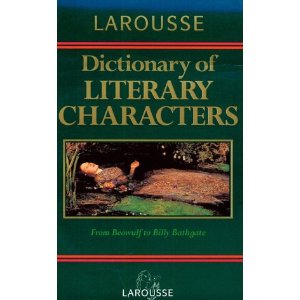
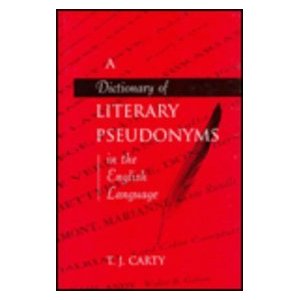
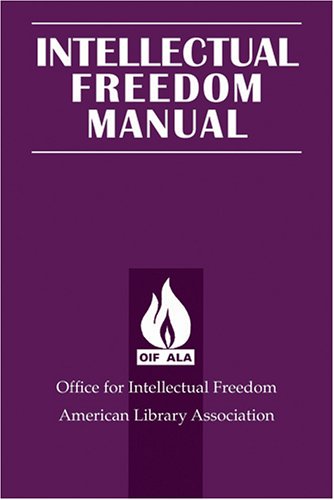
I’ve found all manner of wonderful tools to put to use, both for myself and for others. Here’s a few of them.


I am very pleased to have found copies of books like these on the shelves. I foresee a great deal of free time being spent browsing through the reference collection now, and I am happy to say that research for future projects is going to be a lot more fun than I ever would have guessed.

The Dark Knight Rises premiered at midnight on Friday, after four years of waiting since the release of it’s predecessor. Batman Begins showed us that Batman films could be done well, and pseudo-realistically. Its sequel, The Dark Knight, was an epic film, clouded by the untimely loss of Heath Ledger, but nevertheless a critical and commercial success. Now we have part three to director Christopher Nolan’s grand work.

The Dark Knight Rises is set eight years after the events of the first film, and Bruce Wayne (Christian Bale) has been living in the shadows, though this time without his cape and cowl. Batman is retired, and has been for most of the eight year timeskip. He’s become a recluse, choosing to hide away as criminals are put into Blackgate Prison by the Gotham City Police Department. The public remains convinced that former Gotham City DA Harvey Dent was killed by Batman during the events of The Dark Knight, and so Dent is a celebrated martyr in the war against organized crime and the truth remains hidden by both Bruce Wayne and his chief ally, Commissioner Jim Gordon (Gary Oldman).

Bruce is under pressure from the Wayne Industry board of directors. A planned clean energy project had been funded and then canceled, costing Wayne nearly half of his fortune and prompting his board to ask for him for his resignation. Luckily for Bruce, new love interest Miranda Tate (Marion Cotillard) arrives to provide financial backing and take over operation of the company. Meanwhile, Batman is forced back into action by the combined efforts of cat burglar Selina Kyle (Anne Hathaway) and genius bruiser Bane (Tom Hardy).

Bane quickly establishes himself as a major threat to Batman, both physically and intellectually, finally being portrayed in accordance with his comic book origin. Tom Hardy is nowhere as difficult to understand as many critics feared, and his mask only serves to enhance to sense of terror and unknown that his victims must feel when he arrives. His face is as inscrutable as his motives, as he appears to be a fierce mercenary with a hidden agenda for Gotham City. As Batman’s most deadly foe to date, Bane will leave you wondering if Batman can ever survive their final confrontation. In Gotham, after all, nothing is what it seems.

Nolan’s final foray into the world of Batman does not disappoint. Everything about this movie felt right, from the phenomenal cast to Hans Zimmer’s elegant score. The plot is complex, but not overly so. The cinematography and effects are everything that we love about Christopher Nolan’s filmmaking techniques. I’ve never seen a conclusion to a trilogy leave me feeling so satisfied and still so hungry for more. Thank you, Christopher Nolan, and all of the cast and crew, for giving us three unbelievable Batman films over the last seven years. I could not ask for more than what you gave us with The Dark Knight Rises.

P.S.

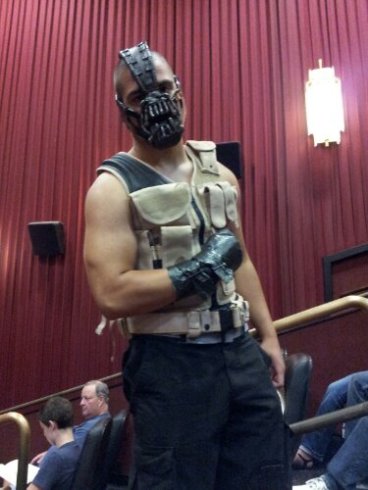
This guy was at my theatre in Colorado Springs. Epic Bane costume. He was generous/friendly enough to let me take a photo of him before the movie started.

image