Skip navigation

Tag Archives: review

Over the weekend, my girlfriend and I took the opportunity to catch a couple of the latest theatrical releases. First up on the schedule was the latest Bond film, Skyfall.
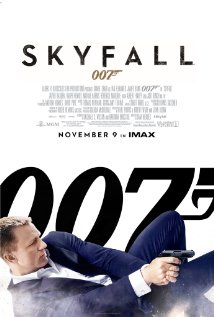
Caught up in development hell (primarily caused by a bankruptcy filing two years ago), this film has been four years in the making. Franchise fans can rest at last, knowing that every day of waiting has been worthwhile. Daniel Craig is back as James Bond, his third film as Agent 007. The ever-graceful Dame Judi Dench reprises her role as James’ boss, M, making her seventh appearance in a Bond film (a role she first assumed alongside Pierce Brosnan’s Bond in Goldeneye in 1995). Starring as the antagonist of Skyfall is Javier Bardem. Bardem brings an eerie boyish energy to the role of Raoul Silva, a computer hacker with a dark connection to M.

Skyfall’s release marks the fiftieth anniversary of the film series, and I can’t imagine a more perfect present to mark the occasion. Daniel Craig’s performance is emotional and sincere as the movie’s plot forces Bond to revisit his past and secure MI6’s future in a rapidly changing world. When hacker and cyberterrorist Silva attacks the security agency’s headquarters, James must return to England to protect M, who is now facing queries and pressure from oversight organizations. Can 007 succeed in a world where a man can “do more damage on [his] laptop in [his] pyjamas than [Bond] can do in a year in the field”? Is everything as black and white as it seems? Bond travels around the world, from England to Macau, leaving no beautiful woman unseduced and no martini undrunk, and he does it all with impeccable fashion, but as Silva chases M and Bond chases Silva, there’s no telling who might get caught in the crossfire.

Skyfall had a lot to live up to, given the delay and the hype that always surrounds a new James Bond film, and the script and cast do not disappoint. Neither do the breathtaking visuals, fast car chases, intense action sequences (Craig has always been a more physical Bond, as he proved in his free-running intro back in Casino Royale), and beautiful score (headlined by Adele’s “Skyfall” theme). Ladies and gentlemen, break out the suits and cocktail gowns and dust off your martini glasses. Bond is undeniably back.

After braving the cold of a November evening in Colorado to make a trip to the nearby brewery (delicious local stout was had, as was, of course, a martini), we returned to the theatre for the second film of the evening, Wreck-It Ralph.
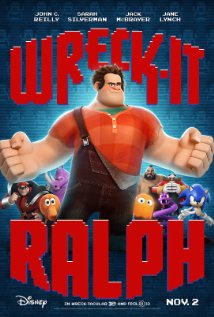
Wreck-It Ralph is the latest animated feature from Disney, and it is a wonderful tribute to video game lovers everywhere. The film is set inside an arcade, where some games come and go, but others, like the (sadly fictional) Fix-It Felix Jr. remain popular decades after their release. Ralph is the villain of Fix-It Felix Jr., and as such, he spends his days climbing to the top of an apartment building (built over his bulldozed forest home) to destroy it, threatening the homes and lives of the Nicelanders until Fix-It Felix Jr. can come to the rescue with his magic hammer. When the arcade closes for the night, however, Ralph and the other video game characters are free to gather in the Game Central Station, a massive terminal where the characters can mingle, have a beer at Tapper’s, or pass through the power cables into other arcade cabinets.

On the eve of the 30th anniversary of his game, Ralph leaves a support group (hosted by Clyde) after hearing from other villains, and realizing that he’s not thrilled with the idea of remaining a villain. After crashing a party thrown by the Nicelanders in Felix’s honor, Ralph sets off to a first-person shooter to win a medal, believing that becoming a hero in another game will earn him respect. While initially somewhat successful (Ralph does get a medal), his quest is derailed when he accidentally ends up in the racing game Sugar Rush. The childish Vanellope Von Schweetz steals Ralph’s medal, and working alongside her is the only way for Ralph to get it back. Unfortunately, Ralph’s game-jumping could spell disaster for his own game (what happens when the villain doesn’t show up for work?) and potentially the entire arcade.

Wreck-It Ralph is a fun ride, filled with great cameos and background events taken from the long history of video games. You’ll find yourself cheering for Ralph from the get-go, and learn that being a bad guy doesn’t necessarily make you a bad guy. The animation is phenomenal, as we get to see the evolution of gaming graphics from 8-bit to high definition (animators apparently had the most trouble making certain characters move jerkily, having trained their whole careers to strive for fluid motions). The voice acting is spot-on, with John C. Reilly as Ralph and Sarah Silverman (in what may be her most sincere and heartwarming role to date) as Vanellope, and the soundtrack includes catchy 8-bit-inspired tracks by Buckner and Garcia (of Pac-Man Fever fame) and Owl City. By the time the credits roll, you’ll be wishing you could put another quarter in the machine and do it all over again.

House of Leaves is an editor’s nightmare.

I love it. It’s a jumble of narratives, strange font choices and jarring shifts between them, footnotes that ramble on for several pages, and pages that suddenly switch direction as the labyrinthine house that serves as the main location for the book.

It is riddled with grammatical errors, and seems utterly nonsensical to anyone who picks the book up and flips through it, hoping to find some semblance of sanity within the pages. In short, it is everything that a novel about an eldritch abomination should be.

I recently finished reading the book, and I must say that while it was one of the most dense reads of all time, it was incredibly satisfying to be able to put the book down and know that it was complete. There’s nothing beyond the text whatsoever. There is nothing behind me, growling in my ears now that I’ve completed the book. 

In short, read the book if you’re looking for psychological horror. It’s not a quick read, but it will definitely make you think.

This morning I had the pleasure of viewing the local premiere of the latest foray into Marvel’s Cinematic Universe, The Avengers. I’ll warn you all in advance. This review may contain spoilers of the tie-in films, Thor, Captain America: The First Avenger, The Incredible Hulk, Iron Man, and Iron Man 2. If you’ve not seen any of them, odds are that you’re not that interested in The Avengers anyway. However, your Avengers experience will remain spoiler-free. See? You can’t say I don’t care about you.

Chris Hemsworth as Thor. Robert Downey Jr. as Iron Man. Chris Evans as Captain America. Mark Ruffalo as The Incredible Hulk. Scarlett Johansson as Black Widow. Jeremy Renner as Hawkeye. Samuel L. Jackson as Nick Fury. Tom Hiddleston as Loki. Written by Joss Whedon. It’s geek heaven.

Whedon directed an all-star cast and managed to give every one of the heroes (not to mention Hiddleston’s delightfully evil grinning villain) a good deal of screen time.

The Tesseract (the Cinematic Universe name given to the Cosmic Cube) used by HYDRA scientists to develop weapons during WWII was lost in the ocean during the events of Captain America: The First Avenger. Eventually, it was recovered by Howard Stark while he searched for the body of Steve Rogers and brought back to America. In the modern day, S.H.I.E.L.D. agents are experimenting with the cube in an attempt to harness the potentially unlimited clean energy that it could provide. Soon, however, the Tesseract is activated from elsewhere in the universe, and Loki arrives on-scene at the S.H.I.E.L.D facility, mindcontrolling Dr. Selvig and Hawkeye and fleeing with the cube.

After surviving the destruction of the S.H.I.E.L.D. facility, Nick Fury pushes the reactivation of the Avengers Initiative, gathering heroes from around the world (and beyond, in the case of Thor) to defeat Loki and reclaim the Tesseract, which Loki wants to use to open a portal to another world, so that an alien army can conquer Earth. Pretty standard comic book fare. The heroes in question, however, don’t necessarily want to work together from the start, and a good portion of the film is dedicated to the working out of their own issues with one another before they can form a team strong enough to defeat Loki and his Chitauri army.

Along the way to the climactic showdown between the Avengers and Loki’s army in Manhattan, we’re treated to brilliant humor, courtesy of Joss Whedon’s writing, and graphics that rival everything that we’ve seen in the tie-in movies thus far. The Avengers is solid, with cohesive storytelling and equal emphasis on every character who has been a part of the buildup. I highly recommend going to see it. Go see it multiple times, because odds are that you’ll be laughing so hard at one of Whedon’s jokes or cheering so loud at the heroic action that you might miss something subtle.

Please be prepared for more sequels and tie-ins in the future, as well. Sequels to Captain America and Thor are in development, along with a 3rd Iron Man film, potentially Black Widow and Hawkeye movies, and Avengers 2. Marvel’s Cinematic Universe is just getting started, ladies and gentlemen. The Avengers is a fantastic step forward for Marvel, and for superhero movies, and cinema in general. Go see it. Watch through the credits. You won’t be disappointed.

Three and a half years ago, Stephen King released a short story collection entitled Just After Sunset. Twelve of the stories in the book had been previously published, leaving one new title to bring the total up to that wonderful number of thirteen. That story was N.

N. was one of the most terrifying stories that I’d read at the time I first encountered the book, and it still chills. King crafted a phenomenal series of layers of narrative. N. is the story of a psychiatrist named John and a patient referred to in his records only by his first initial, the titular N. N. is suffering from insomnia and severe obsessive compulsive disorder that he claims stem from a visit to a field near John’s home town. When N. eventually commits suicide, John is driven to investigate more, to see if there was something that he could have done to save his patient.

The outer layers of the story focus on John’s investigation and the impact that his own visit to the field has on his family and friends. It’s eventually revealed that part of the madness that comes upon the people who visit Ackerman’s Field derives from a series of standing stones in the middle of the field. There are seven stones (a bad number) there when the field is viewed by the naked eye. Gazing through a filter of some sort such as a camera, however, reveals an eighth stone. Is it there? Touching each of the stones in turn seems to prove that there are eight, but the other stone isn’t always there. N. believed that something, some Lovecraftian horror, lurked in the center of the stones, and as long as there were eight (a good number), it would be contained. “Eight stones would keep them captive, but if there were only seven…they’d come flooding from the darkness on the other side and overwhelm the world,” he said. Was he right, or is it only a delusion?

I recently returned to the world of N. Marc Guggenheim and Alex Maleev collaborated with Stephen King to transform his novella into a skillfully paced graphic novel.  If you’re a fan of well-written horror, I would highly recommend giving N. a read, in either format. The graphic novel maintains the delightful and terrifying prose that King is known for, and shows just how unsettling uncertainty can be.

King himself has said that, despite the Lovecraftian atmosphere of the story, it’s actually inspired by Arthur Machen’s The Great God Pan, of which Lovecraft himself said “No one could begin to describe the cumulative suspense and ultimate horror with which every paragraph abounds.” Time to add that to the list of stuff to read tonight.

Woody Allen has had a long, very…um…interesting career. I’m normally a little bit wary of his films in general, though the last one I saw was for class, and that was involving Gene Wilder and his less-than-typical affection for a sheep. That was back in the 70s, though. He’s come a long way since then. Allen’s latest offering is Midnight in Paris, a tribute to the titular city during what some would consider its best age: the 1920s.

Owen Wilson stars as Gil, a successful screenwriter who desires more than the typical Malibu life that his fiance has in mind for them. He wants to live la vie de bohème, and write the great American novel, as so many of his heroes did before. One night, while visiting Paris with his fiance and her parents, Gil goes for a walk in the middle of the night. After finding himself invited into a passing car for champagne, Gil arrives at a party where a young woman introduces herself as Zelda. The two discuss Gil’s career as a writer, and Zelda says that he should meet her husband, who is a writer as well. Gil is introduced to Zelda’s husband, Scott, and realizes that somehow, he has found himself in a club with the Fitzgeralds, watching Cole Porter playing the piano in the 1920s.

Gil returns to the past several nights in a row, discussing his manuscript with Gertrude Stein and Ernest Hemingway, meeting the great surrealists, and musing over his own happiness with his upcoming wedding. Throughout the film, exceptional performances from a stellar ensemble ensue, and Allen’s love for Paris is evident. All in all, I’d have to give the film 5 out of 5 stars, and rank it very high on my list of personal favorites. It has a romantic charm that I’ve not seen since Moulin Rouge. It may very well have supplanted Moulin Rouge as my all-time favorite movie. There’s something irresistible about films about writers. I can’t wait to see how Midnight in Paris performs at the Academy Awards next month, when it goes up for Best Picture, Best Director, Best Original Screenplay, and Best Art Direction.

Pick it up, if you have the chance. If you have any fondness for the Lost Generation, you owe it to them to see this movie.